

Today, on April 6, 2016, in the Calarasi town, the construction site for the construction of the kindergarten according to German standards of energy efficiency was inaugurated.
The event was attended by Prime Minister, Pavel Filip, the Ambassador of Germany, Ulrike Knotz, the Executive Manager of the Moldova Social Investment Fund, Mircea Eşanu, the Director of Energy Efficiency Agency, Michael Stratan, and by representatives of local public authorities.

"Our relationship with development partners are manifested through concrete actions for Moldovan citizens. Our European course and approaching of international institutions are found not only on paper and in statements, but also in the concrete investment projects, like this one in Calarasi," Pavel Filip said. The Prime Minister emphasized the innovative nature of the project - "I always said that I will support innovation and that is why I'm here. We start a very important construction for Calarasi, which is part of the new generation projects, which is a beginning and a good example for other regions of the Republic of Moldova."
German Ambassador said that support of energy efficiency projects is a priority for bilateral cooperation, and the project conducted by MSIF in Calarasi, with the support of German KfW Bank, has an important educational character. Going to the kindergarten, future generations will learn to use carefully natural resources, to use advanced technologies and to care for the environment.
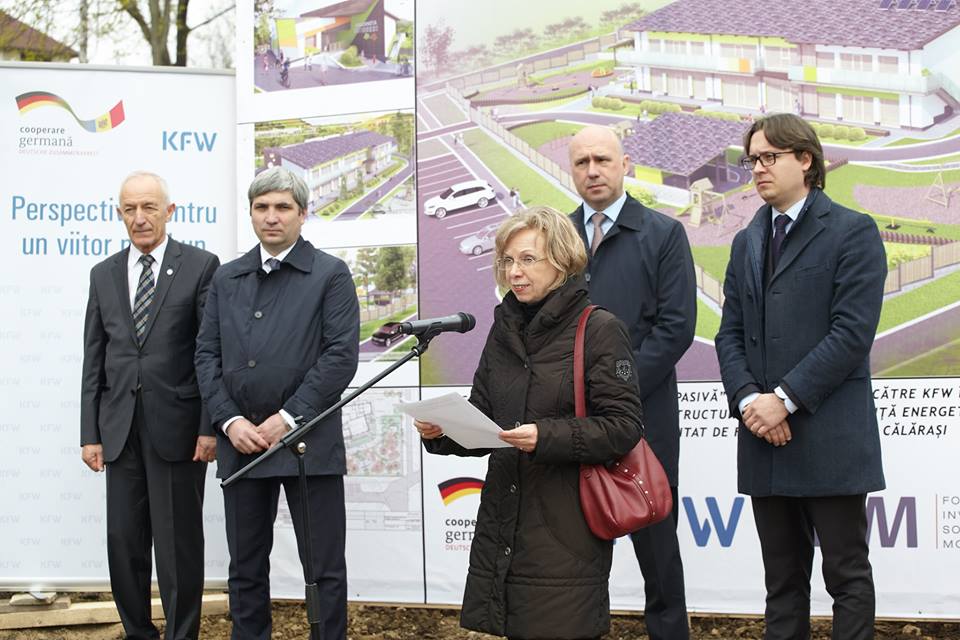
"The kindergarten in Calarasi is the first public institution in Moldova, built after the German passive house standard. The kindergarten will have an area of 1100 square meters, and its maintenance costs - heating, ventilation, water cooling and lighting will be comparable to those of an apartment with three rooms. So, the bill will not exceed on average 2,000 lei per month. The technologies used here will enable savings of more than 80% of bills," Mircea Eşanu, the Executive Manager of MSIF, said.
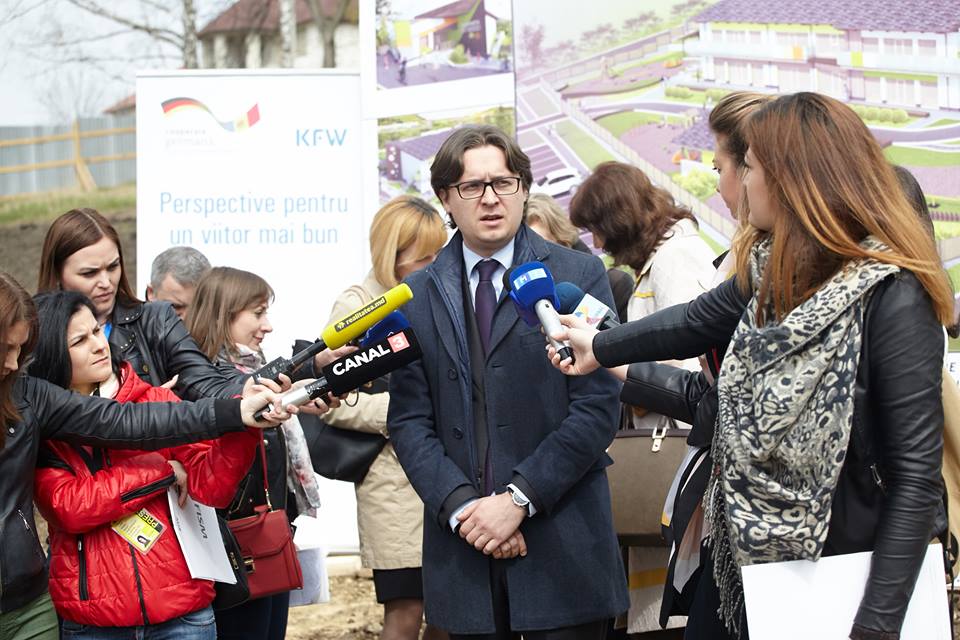
The Mayor of Calarasi, Nicolae Melnic, thanked the donors and the Moldova Social Investment Fund for the provided aid. The mayor noted that there are more than 400 children in the city, who do not have places in kindergartens, and the fact that the maintenance of the future building will be cheaper, will greatly help the local budget.
The kindergarten will have the enrollment capacity of 100 children and will be commissioned in the first half of 2017. The innovation of the project consist in applying of passive house standards in the construction of the kindergarten, which require reduced energy consumption, minimal losses of energy and high standards of energy conservation. Thus, the annual maintenance costs of the kindergarten will be 80% smaller than an ordinary building.
The design was carried out by architects from Moldova with the participation of experts from Germany, delegated by the Independent Institute for enhanced energy efficiency in construction "Passivhaus Institut", which has the best expertise in this field.
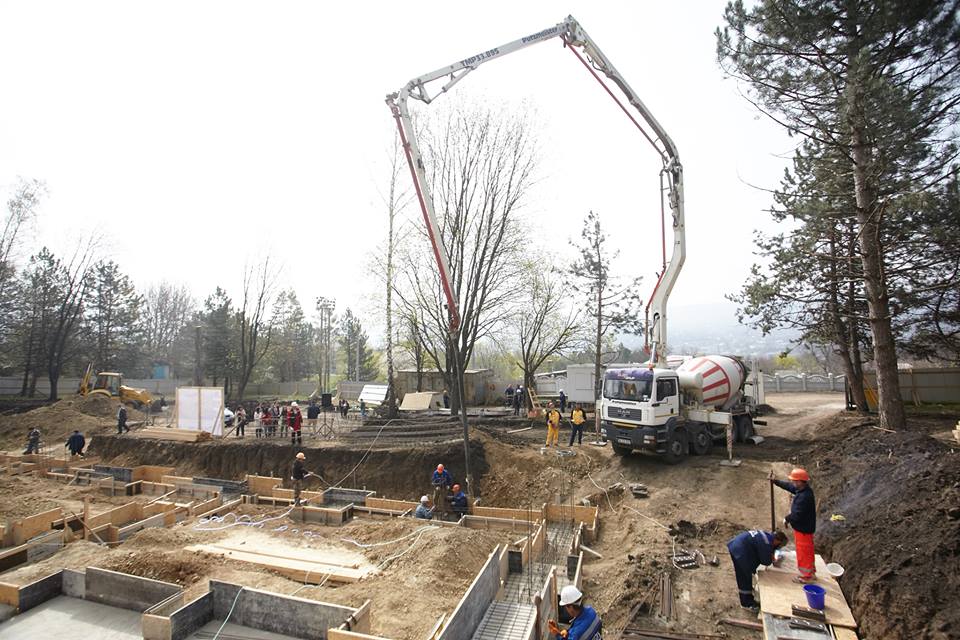
Construction of kindergarten is carried out within the frame of the "Social Infrastructure and Energy Efficiency" project, implemented by MSIF with the support of German KfW Bank. Earlier within the frame of the same project, MSIF has implemented 89 social infrastructure subprojects with application of energy efficient technologies.
About the MSIF:
Moldova Social Investment Fund is a public, non-commercial and non-profit organization created with the support of the World Bank to contribute to the implementation of National development strategies in Moldova.
Since the beginning of its activity, the MSIF has implemented over 2,000 sub-projects with the use of financial resources allocated by international donors, including the World Bank, European Union, SIDA, DFID, JSDF, KfW, UNICEF. Currently, Moldova Social Investment Fund manages infrastructure projects, energy efficiency and social inclusion projects worth 32 million euros, offered to Moldova by the Romanian Government, KfW and the World Bank.
